Michigan Outside
  • Home
  • Blog
  • About

Michigan Outside

BLOG

Trout Unlimited Restores National Forest Streams in Michigan

1/15/2024

Comments

 
Picture
The doe stepped nervously around the bend of a narrow river in the Ottawa National Forest, but I had already claimed the hole. She darted into the thick vegetation, and I heard her splash upon re-entering the river a little farther upstream. After catching and releasing three beautiful native brook trout - one each on a nymph, a streamer, and a dry fly - I hiked back downstream and got back on the road.

The hole was just upstream from a Trout Unlimited project site where, working with U.S. National Forest staff, they’d removed old dam pilings blocking passage for trout. When aquatic organism passage barriers like dams and undersized culverts block trout and other aquatic organisms, it limits their ability to escape warm summer temperatures or other stressful environmental factors. When those barriers are removed, trout and other aquatic organisms can thrive, while reducing the risk of flooding when old dams fail or culverts clog up.

These projects restore watersheds to their natural function of moving and storing water by removing or replacing the artificial structures which impede them. In 2022, the U.S. Forest Service (USFS) and Trout Unlimited (TU) agreed to a 5-year, $40 million initiative to restore watersheds flowing through National Forests across the country. It was funded through the Bipartisan Infrastructure Law of 2021 and the Inflation Reduction Act of 2022 and builds upon years of successful partnership between TU and the USFS, such as the dam pilings removal project.

The nationwide initiative is already having an impact in Michigan.

In the Ontonagon River watershed, TU completed two projects replacing undersized and perched
culverts that reconnected almost 10 miles of trout habitat. On Calderwood Road over Trout Creek, two undersized, perched culverts blocked trout from passage to 7.5 miles of high-quality upstream habitat. The culverts increased the velocity of water moving through them, creating a plunge pool that increased erosion and flooded the natural stream banks. Both the velocity and the height of the perch – the distance from the downstream surface up to the bottom of the culvert – prevented smaller trout from getting upstream through the culvert. Electro-shocking before the project found more brook trout downstream than upstream of the road crossing.

Sarah Topp, TU’s Upper Peninsula Stream Restoration Manager, worked with Ottawa National Forest staff, the Ontonagon County Road Commission, and Snow Country Contracting of Bessemer to replace the culverts. They created a diversion channel, removed the old culverts, and replaced them with a 16-foot wide, 9-foot-tall culvert that restored natural stream function, eliminated the plunge pool, restabilized the downstream banks, and opened 7.5 miles of upstream habitat for brook trout.

A similar aquatic organism passage (AOP) project TU conducted this summer where Spargo Creek
crosses a forest road – also within the Ontonagon watershed – opened 1.5 miles of quality upstream trout habitat in Houghton County.

Below the bridge, Jeremy Geist, TU’s Great Lakes Stream Restoration Manager, worked with Huron-Manistee National Forest staff and the Newago County Road Commission to replace perched and undersized culverts on Woody Creek, a tributary to the Pere Marquette River. In the Manistee River watershed, he led projects restoring road-stream crossings on Peterson Creek and Hinton Creek in Wexford County.

The Hinton Creek project is significant because it removed the ninth and final upstream barrier in the Hinton Creek watershed, completing a multi-year effort opening at total of 15 miles of habitat. Hinton Creek is a coldwater refuge supporting a naturally reproducing population of native brook trout identified as a priority watershed through a joint USFS and Wexford County Road Commission survey of road-stream crossings in the Huron-Manistee National Forest.
Michigan is blessed with abundant National Forest public land containing more miles of trout stream than any angler can hope to possibly explore in a single lifetime. Significantly, Michigan’s spring-fed coldwater streams and river systems provide a stronghold for temperature-sensitive native brook trout and wild brown and rainbow trout as climate change warms and dries rivers in other parts of the country.

These road-stream crossing projects in our National Forests restore the ability of these watersheds to provide a home for trout for generations to come, while leveraging federal investments into on-the-ground results employing local contractors and relieving the budgets of local county road commissions.

It’s something to appreciate when we’re standing mid-stream, appreciating the blue halos around the spots of a wild, native brook trout in the net whether caught on a nymph, a streamer, or a dry fly.

Comments

On the Cusp of Conservation History to Recover Wildlife

6/1/2022

Comments

 
Picture
This article originally appeared in the June 2022 issue of Woods-N-Water News

By Drew YoungeDyke
​
The Recovering America’s Wildlife Act is poised to pass Congress after being advanced by committees in both the U.S. Senate and the U.S. House of Representatives, with over 30 bipartisan cosponsors in the Senate and over 170 in the House. This legislation – which would provide $1.39 billion annually in wildlife restoration funding - would be the biggest conservation bill perhaps since 1937’s Pittman-Robertson Act that directed excise taxes on hunting and shooting equipment to wildlife restoration. It’s sorely needed right now as up to one-third of fish and wildlife species in America are at increased risk for extirpation or extinction, as maintained by each state’s list of Species of Greatest Conservation Need.

The Recovering America’s Wildlife Act was co-sponsored in the House by Michigan Rep. Debbie Dingell (D) and Nebraska Rep. John Fortenberry (R), and in the Senate by New Mexico Sen. Martin Heinrich (D) and Missouri Sen. Roy Blunt (R). It has been introduced each term since 2016, but for the first time ever, it has now passed essential committees in each chamber and is ready for a floor vote in each. And it may not get another chance.

If the Pittman-Robertson Act was so successful, though, why is a bill like the Recovering America’s Wildlife Act needed now? Some brief conservation history will help to understand.
For the first couple hundred years of settler colonial history in the United States, the conservation of fish and wildlife was not a priority. Abundant fish and wildlife populations conserved by Indigenous generations for millennia flourished, but as their lands were taken the wildlife was exploited commercially and reduced to alarmingly low numbers by the early 20th century.

Conservationists responded to the wildlife crisis by establishing game laws, conservation departments and commissions, license fees and, finally, in 1937, dedicated funding to restore wildlife populations through the Federal Aid in Wildlife Restoration Act - known as the Pittman-Robertson Act – to direct the excise tax on firearms and equipment to state conservation departments for wildlife restoration. In 1950, Congress passed the Dingell-Johnson Act to apply the same concept to fishing and boating equipment to fund fish conservation.

As most hunters and anglers learn in hunter’s safety courses, this funding allowed state conservation departments to hire professional fish and wildlife biologists and fund the restoration of fish and wildlife. Most of that effort was directed at iconic game species like white-tailed deer and wild turkeys. Through a system employing professional biologists to make recommendations on actions like license quotas, bag limits, hunting and fishing regulations, and reintroductions and stocking, fish and game populations thrived, and most still do today.

However, many smaller non-game species have not thrived. Their pressures are different. For instance, overhunting was not the cause of decline for monarch butterflies, so game regulations can’t do much to restore them. The pressures on the primarily one-third of American fish and wildlife species on the state Species of Greatest Conservation Need lists are the pressures of American society itself: things like habitat loss, wetland conversion, the effects of pesticides, or invasive species. And funding for wildlife agencies to mitigate these pressures to keep these species off the endangered lists has never been adequate, and certainly not on par with the hunter- and angler- funded conservation efforts for fish and game species.

In 1973, Congress passed the Endangered Species Act, but this is an emergency room measure with little to no preventative funding to recover species before they get to that point. Currently, only about $61 million annually is granted to states this purpose, whereas the Association of Fish and Wildlife Agencies estimates that minimally $1.3 billion is needed to match the scale of recovery needs.

For years, hunting and angling groups have called for other outdoor recreationists to foot a similar bill to the Pittman-Robertson excise taxes for non-game wildlife conservation – such as a backpack tax - as if we as hunters and anglers haven’t contributed just as much to the decline of non-game species through our daily actions as Americans resulting in habitat loss, wetland conversion, or the use of pesticides. Or that seeing nongame species like common loons or bald eagles isn’t just as valuable to our time outdoors as it is to someone not also trying to catch a fish or shoot a deer.

The current wildlife crisis is a whole society crisis, not the sole responsibility of a subset of outdoor recreation users. As such, its solution must match the magnitude of the crisis, as National Wildlife Federation President and CEO Collin O’Mara says. And that’s what the Recovering America’s Wildlife Act does.

The Recovering America’s Wildlife Act directs $1.3 billion to state wildlife agencies and $97.5 million to Tribal governments to fund wildlife restoration of species of greatest conservation need. Each state maintains a list of those species and needed recovery actions – often grouped by habitat type – in State Wildlife Action plans, updated every ten years.

This act will actually provide the funding to implement those plans, for many states matching or even exceeding what they receive each year from Pittman-Robertson funding. For instance, Michigan would receive over $27 million annually under the Senate version of the Recovering America’s Wildlife Act; this year it received about $31 million from Pittman-Robertson funds. Passage of the Recovering America’s Wildlife Act would almost double Michigan’s federal funding for wildlife restoration.

I could argue that the dedicated funding for mostly non-game species will also benefit game species sharing similar habitat – which it will – or that it will mean less has to be spent out of funds raised from hunting licenses or firearms excise taxes for wildlife restoration benefitting nongame species – which it will – but I’m not going to, because that would assume that as hunters and anglers, all we care about is what we can catch or shoot. And I don’t think that’s a very accurate description of our community, and it’s a rare hunter or angler who doesn’t also participate in another form of outdoor recreation.

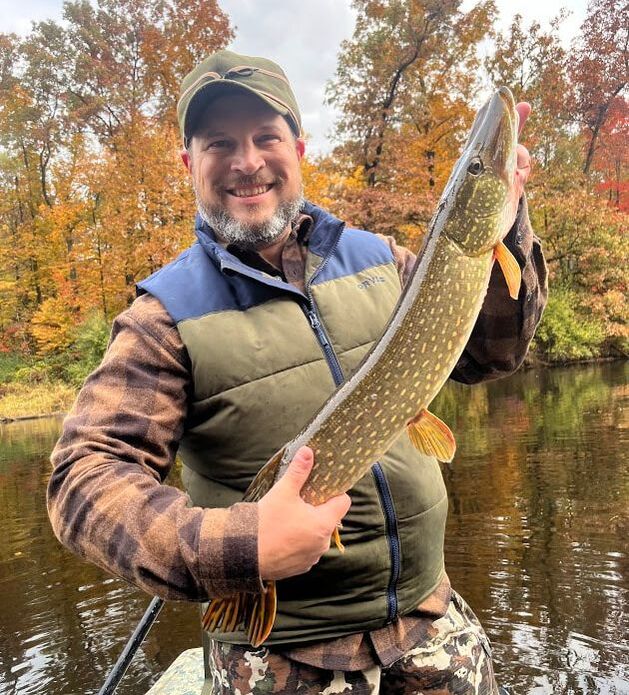
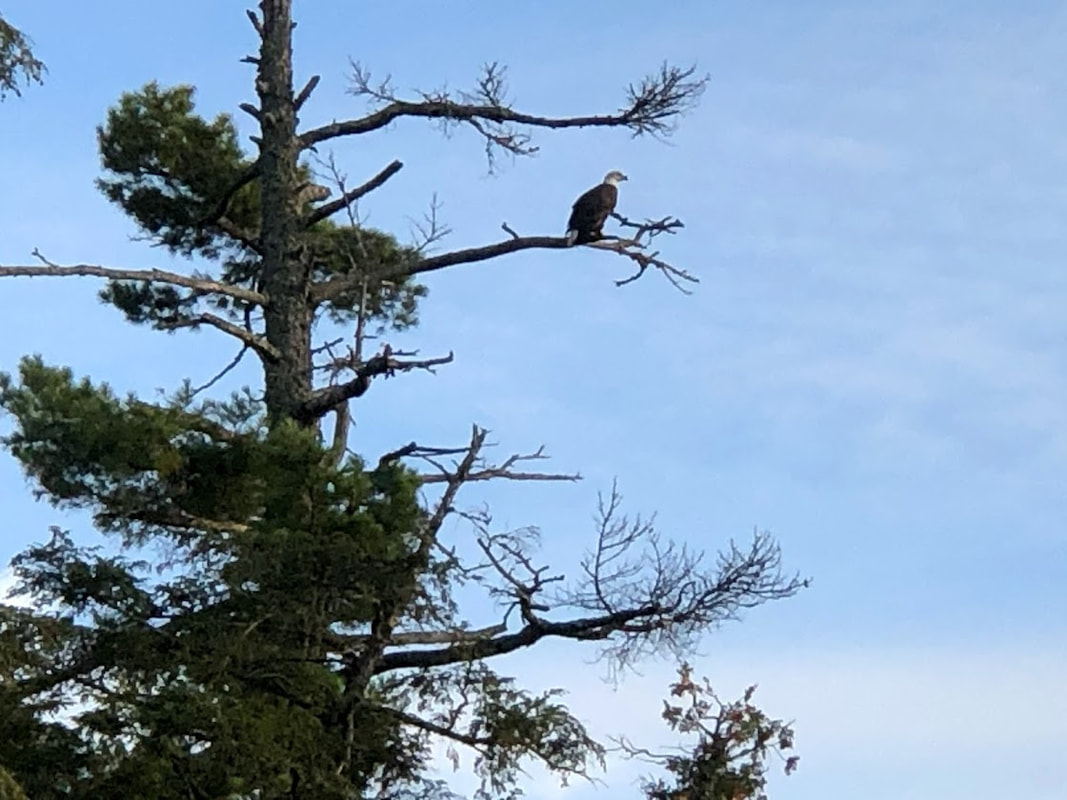
When I fly fish for northern pike up at my family’s Upper Peninsula cottage, seeing the bald eagles soar over the lake and hearing the loons call are as important to my outdoor experience as catching northern pike. When I surf at Sleeping Bear Dunes National Lakeshore, it wouldn’t be complete if I didn’t see a piping plover run along the beach or a monarch butterfly when I hike the dunes. And when I’m sitting against the base of a tree in the November deer woods in a northern Michigan state forest, a visit from a red-headed woodpecker breaks up the monotony of watching the trail below. Wildlife are the animating force of the woods and waters we haunt as outdoorsmen and outdoorswomen, and whether intended for our plate or creel or not, they give life to our experiences.

With the Recovering America’s Wildlife Act, we are on the cusp of conservation history, finally dedicating the resources needed to recover America’s full diversity of wildlife, to have the impact on future generations that those legendary conservationists of past generations had on us, like National Wildlife Federation founder Ding Darling, who led the effort to pass Pittman-Robertson Act in 1937.

It’s far from a sure thing, though. While it’s the most important wildlife conservation bill in generations, the Recovering America’s Wildlife Act still has to compete with every other issue Americans consider a priority for floor time in both chambers, despite its bipartisan support and the high number of congressional co-sponsors.

Only time will tell whether our generation seizes this moment to conserve wildlife, or condemns us for letting the moment – and the wildlife - pass into history.

I hope we choose the former. 
Comments

How the Land and Water Conservation Fund Supports Trail Running

9/25/2018

Comments

 
Picture
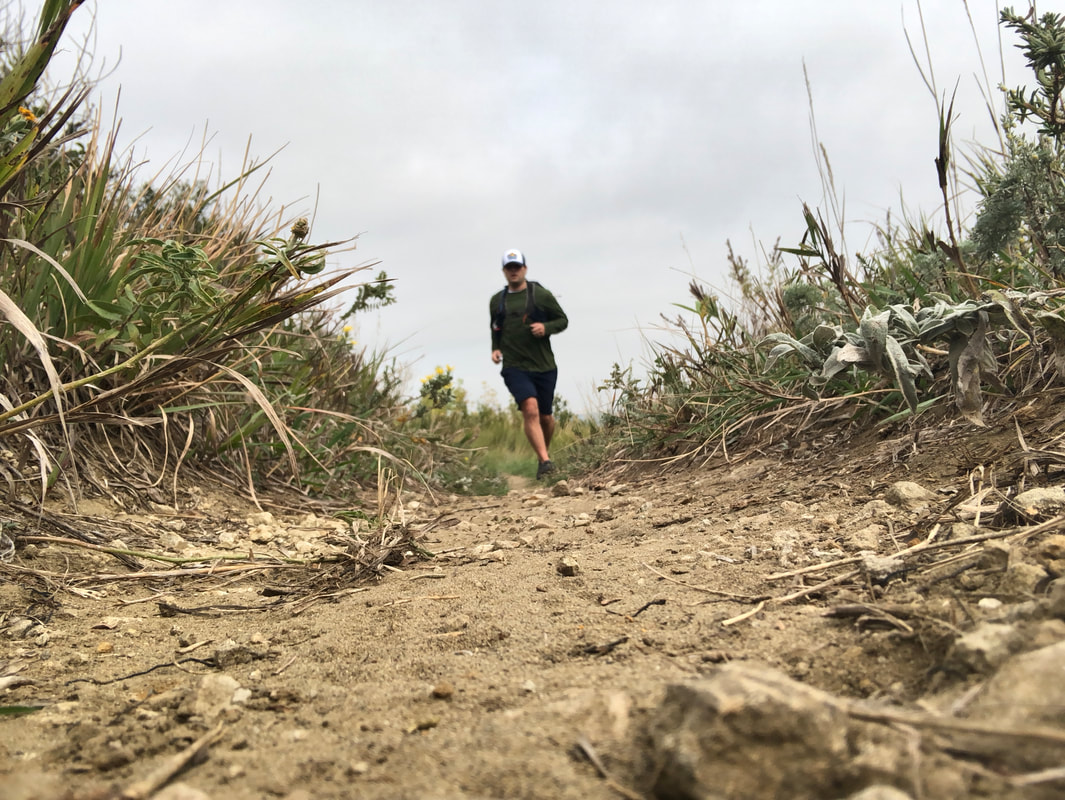
My forefoot strikes dirt, my toes push off and the other foot follows suit. Prairie grasses brush my shins as I run the Bloody Knife Trail up a hill above General Custer’s old house at Fort Abraham Lincoln State Park near Bismarck, N.D. A whitetail explodes out of a woody draw and bounds up a hill. The Missouri River flows below where Louis and Clark camped on their voyage west in 1804. The reconstructed On-a-Slant Mandan village lies at the confluence of the Heart and Missouri Rivers. Like many trails I’ve run, the Land and Water Conservation Fund has contributed to this public land opportunity for all.

Trails to run are the first feature I look for when visiting a new city. I traveled to Bismarck-Mandan, N.D., earlier this month for the Association of Great Lakes Outdoor Writers annual conference. We enjoyed a tour of the Custer house at Fort Abraham Lincoln State Park on the first night of the conference, but I focused on the hills behind it. The Land and Water Conservation Fund (LWCF) has invested almost $310,000 in the park’s trails and facilities, so a couple days later I drove back out to the park and ran five miles on its trail system.

Trail Running Participation is Growing

The Outdoor Foundation released its 2018 participation report in July. It showed that 55.9 million Americans participate in running, jogging and trail running, making it the most popular outdoor activity in the country. Trail runners have more than doubled as a subset of that category in the past decade, from 4.2 million in 2007 to 9.1 million in 2017. Five of the top six motivations to get outside involve some version of “exercise” or “nature”, according to the report, and trail running accomplishes both.

Trail running reduces impacts to knees from striking hard surfaces, strengthens stabilizing muscles from uneven terrain, and includes the psychological benefits of spending time in nature. It has helped me lose 50 pounds in the three years since I started. Trail running is also uniquely dependent on public lands. While trail runners only need a single track dirt path to run on, those trails often need public lands and facilities like parking lots, restrooms and trailheads to support them.

The Land and Water Conservation Fund Invests in Trails

Many of the trails we run — like those in the Fort Abraham Lincoln State Park — have received Land and Water Conservation Fund (LWCF) investments for support facilities, trail development and the acquisition of the public land itself. The Land and Water Conservation Fund was established in 1964 to invest royalties from offshore oil and gas development into public outdoor recreation land and development, making grants to local, state and federal entities at no cost to taxpayers.

In fact, all of the trail races I’ve run in the past two years have occurred on LWCF-acquired or developed land. I ran the 10K at Trail Fest last summer at Brighton State Recreation Area in Michigan, where the LWCF has invested almost $740,000. A couple weeks later I ran the Boulder Sunset 5K in Boulder, Colorado. The Boulder Reservoir has received more than $72,000 in LWCF grants. This summer, I ran the half marathon at Trail Weekend and the 50K at Run Woodstock. Both races use the Potawatomi Trail and facilities in the Pinckney State Recreation Area, which has received almost $830,000 through the LWCF. And this is just a sliver of the growing number of trail races held across the country. Chances are good that the LWCF has invested in your favorite trails, too: there isn’t a single county in America which hasn’t received an LWCF grant.

The Land and Water Conservation Fund Will Expire Without Action by Congress

The LWCF is set to expire at the end of September, 2018, though, if Congress does not reauthorize it. While I was in North Dakota, news broke that the House Committee on Natural Resources passed a permanent reauthorization of the LWCF after a compromise was reached. At the same time, the National Wildlife Federation public lands team and state affiliates were in Washington, D.C. lobbying their congressional representatives for reauthorization of the LWCF.
This is a big step forward, but the compromise must still be passed by the full House of Representatives, the U.S. Senate, and signed into law. And while the compromise includes permanent reauthorization, it does not include dedicated funding, so there is still much work to do with little time to do it.

Whether you run trail races or just like to kick up dirt for fun and exercise on your own — like when you’re in North Dakota for a work-related conference — it’s likely that your favorite trails have received LWCF investments to help make them what they are. The LWCF supports the trails we run, so let’s support the LWCF so it can keep making those investments for us.

Please join the National Wildlife Federation in calling upon your senators to reauthorize the Land and Water Conservation Fund.
Comments

Ballast Water Blues

8/28/2012

Comments


Ballast Water Blues

Picture
by Drew YoungeDyke

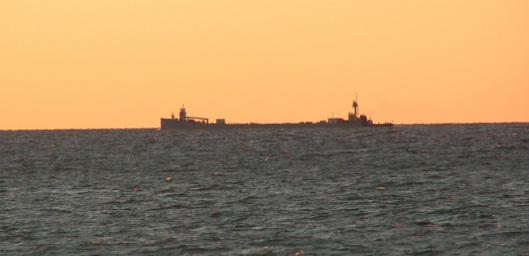
One of the biggest challenges facing the Great Lakes is the damage caused by invasive species, many of which arrived in the Great Lakes by stowing away in the ballast tanks of oceangoing vessels. 

In 2005, Michigan took the lead on protecting the Great Lakes by passing a Ballast Water Statute that requires oceangoing vessels to either refrain from dumping ballast water in the lakes or to use environmentally sound treatment measures. A new bill, though, would insert a loophole in the Ballast Water Statute that could allow new invasive species into the Great Lakes.

After the 2005 Ballast Water Statute was passed, the shipping industry immediately challenged it. Two federal courts, however, upheld both its legitimate purpose and its constitutionality. The Sixth Circuit Court of Appeals said:

“To the extent the permit requirement even marginally reduces the problem of [aquatic nuisance species] introduction, its local benefits would be very large. In contrast, the burdens imposed by the permit requirement ... are de minimis.”

The shipping industry, though, has now introduced a bill that would punch a loophole into the Ballast Water Statute big enough for invasive species to swim through. SB 1212 would identify one specific treatment method - deep-sea ballast water exchange - that could satisfy the permit requirements. This is the same method required by the Coast Guard that - because it could still allow invasive species through - prompted Michigan to enact the Ballast Water Statute in the first place. Even the Coast Guard is updating its standards away from this method, though there is debate about whether even its upgraded standards will be strong enough. SB 1212, however, would lock this method in place, essentially repealing Michigan’s Ballast Water Statute.

Invasive species cost the Great Lakes region $200 million a year, according to the National Wildlife Federation. That’s $1 billion every five years, which is only a drop in the bucket, though, compared to the $7 billion Great Lakes fishery and $12.8 billion tourism economy. An estimated 823,000 Michigan jobs depend on the Great Lakes and tourism, and 90,000 jobs depend on the Great Lakes just in the counties which border them. As more of those counties are in Michigan than any other state, Michigan has to be the leader in protecting the Great Lakes from the invasive species which threaten those jobs.

Invasive species prevention is one of the few truly bipartisan issues in Michigan. In fact, the unanimous approval of a bill to create an Invasive Species Council prevented any member of the Legislature from getting a 0% on the Michigan League of Conservation Voters' Michigan Environmental Scorecard. The 2005 Ballast Water Statute also passed the Senate unanimously, and only one representative voted against it. Among those voting for it were two co-sponsors of SB 1212, Senators Tom Casperson and Joe Hune, who were representatives at the time. Given their support for the 2005 law and the Invasive Species Council, its perplexing why they would flip-flop their positions now and co-sponsor a bill that would effectively repeal the Ballast Water Statute which they helped enact.

So, we must ask, who would benefit from weakening ballast water requirements from oceangoing vessels? Obviously, that would be oceangoing vessels which would no longer have to refrain from discharging ballast water. However, according to DEQ statistics, less than 1% of port operations in Michigan are from oceangoing vessels. This means that we would be risking a $7 billion fishery, a $12.8 billion dollar economy, and tens - if not hundreds - of thousands of jobs so that less than 1% of ships which dock in Michigan can avoid the inconvenience of not polluting our waters with invasive species.

Michigan has long been a leader in protecting the Great Lakes from invasive species. As The Great Lakes State, it’s up to us to set the bar for other states about what’s expected of them to keep the Great Lakes healthy. How can we ask Chicago to stand up to shipping interests and close the Chicago locks to keep out Asian carp, when we’re caving to them and letting invasive species into the Great Lakes by weakening our ballast requirements? Michigan has too much at stake - too many jobs - to stop being a leader now.

Comments

The Attack on Northern Michigan Public Land

6/15/2012

Comments

 
Picture
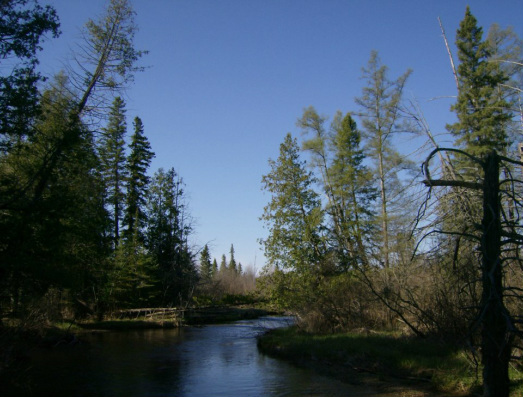
The Michigan legislature thinks we have too much of this.
The Attack on Northern Michigan Public Land
by Drew YoungeDyke

The Michigan legislature has mercifully adjourned for its summer break, though I’m not sure if there’s much more damage left to inflict. As someone who grew up in northern Michigan, this was a tough week to analyze and write about conservation legislation for a living.

Northern Michigan was hit hard by the legislature’s actions this week and, sadly, some of the legislators representing northern districts were the very ones who voted for the legislation. In what may have been the single worst week for anti-conservation legislation coming out of Lansing, the legislature passed bills which capped the amount of public recreation land in northern Michigan, stripped dedicated funding for future public land acquisitions in northern Michigan, and opened the door for the spread of invasive vegetation.

THE LAND CAP BILL

The Land Cap Bill, SB 248, has a saga all its own. Sponsored by Sen. Thomas Casperson (R - Escanaba) and passed last year by the Senate, the House took it up this Spring. The original bill put a statewide cap on public land acquisition, restricting the amount of public recreation land available. What became abundantly clear during a January town hall meeting in Alpena was that the bill would primarily benefit only those in a position to purchase large tracts of Upper Peninsula land that would be forced into privatization by the bill. (More direct bills, like HB 4577 & 4579 and SB 1021 & 1022, are addressing the issue of payments in lieu of taxes, which proponents of the Land Cap Bill used as an excuse for its passage). 

Conservation groups including MUCC, Michigan Trout Unlimited and Michigan LCV, whose members sent thousands of messages to the committee, pushed for amendments to the bill which would lessen its negative impacts. One such amendment was passed by the House Committee on Natural Resources, Tourism and Outdoor Recreation to exempt the entire Lower Peninsula from the cap, which was offered by Rep. Wayne Schmidt (R - Traverse City).

The House of Representatives rejected that compromise on Tuesday, though, instead adopting one which specifically included the entire northern Lower Peninsula in the land cap. While language in the bill suggests that the legislature should remove the cap once they approve of a DNR land acquisition plan, there is absolutely nothing in the bill which guarantees this will ever happen.

On Wednesday, hundreds of Michigan LCV members sent messages to their representatives urging them to oppose the Land Cap Bill. However, in one of the closest votes this session, the House passed the bill 58-52 - a loss of just four votes! Disappointingly, four representatives from the northern Lower Peninsula could have made the difference and protected their own districts from the cap. Instead, Reps. Ray Franz (R - Onekama), Greg MacMaster (R - Kewadin), Frank Foster (R - Petoskey) and Philip Potvin (R - Cadillac) all voted to put their own districts under the Land Cap, as did Reps. Matt Huuki (R - Atlantic Mine) and Ed McBroom (R - Vulcan).

Several representatives should be commended for voting to protect public land access in their districts: Reps. Wayne Schmidt (R - Traverse City), Peter Pettalia (R - Alpena), Bruce Rendon (R - Lake City) and Stephen Lindberg (D - Marquette) all opposed the Land Cap Bill, and Reps. Jon Bumstead (R - Newago) and Holly Hughes (R - Montague) crossed party lines to oppose the bill. If you live in one of these representatives’ districts, please thank them for standing up for conservation.

THE NATURAL RESOURCES TRUST FUND

When the annual appropriations bill to allocate funds for Natural Resources Trust Fund projects was introduced in February, we heard rumors that politicians would try to remove projects recommended by the Natural Resources Trust Fund Board. The Trust Fund Board was created to take the politics out of the process by which royalties from the sale of oil and gas on state land are used to purchase and improve public recreation land at state and local levels of government.

Michigan LCV members sent hundreds of messages to members of the appropriations committee and they listened, allocating all $39 million to the recommended projects. An amendment was defeated on the House floor to remove four state land acquisition projects and the bill moved to the Senate. The Senate went on Spring Break, and when they returned they passed the bill unanimously. Before they passed the bill, though, they slipped in an amendment removing $4 million for those four state acquisition projects and ignoring the nonpartisan Trust Fund Board’s recommendations.

Last week, the House rejected the Senate’s changes, and this week the bill went into a conference comprised of three representatives and three senators for resolution: Senators Darwin Booher (R - Evert), Roger Kahn (R - Saginaw Twp.) and Morris Hood (D - Detroit), and Reps. Chuck Moss (R - Birmingham), Eileen Kowall (R - White Lake), andRichard LeBlanc (D - Westland). Of those, only Sen. Booher represents a northern Michigan district. Yesterday, the conference decided to approve funding for two eco-regional acquisition projects in the southeast and southwest Lower Peninsula, and deny funding for eco-regional projects in the northern Lower Peninsula and the Upper Peninsula.

Eco-regional projects allow the Department of Natural Resources (DNR) the flexibility to purchase high-priority lands when they become available. Often they include inholdings within existing state land areas that become available after the April application deadline for the next year’s Trust Fund review process. WIthout the flexibility to purchase these inholdings, the DNR will not receive funding to purchase the properties until 2014, by which time the properties may already be off the market. This means that no additional public land will be purchased in northern Michigan this year, even if it is high-priority land that would improve outdoor recreation opportunities in the region. Once again, just like in the Land Cap Bill, northern Michigan was specifically targeted for reduced public land access.

The whole state was impacted by the bill, though; after the conference reported its recommendations, the House voted to approve it but the Senate failed to consider it before it adjourned for its summer break, despite reports that the DNR agreed to the compromise only because it didn’t want to delay approval by the legislature. This means that funding for all of the approved local projects, like building pools and parks, will be put on hold at least until the Senate returns briefly in July. This means that almost a hundred projects across the state which could be employing summer workers, drawing tourists, and improving the quality of life for Michiganders, will have to wait, even though the money used for these projects is constitutionally-protected specifically for these kinds of projects!

PHRAGMITES AND BEACH GROOMING

Senate Bill 1052 - also sponsored by Sen. Casperson - was moved out of committee on Tuesday and passed on Thursday to remove state oversight of beach grooming between the ordinary high-water mark and waters edge on shorelines. While this area is not always public land, it is part of the public trust on Great Lakes shorelines. Amendments have improved this bill since its original version, which would have restricted public access to walk Great Lakes shorelines and damaged shoreline wetlands.

However, the bill that was passed still allows for removal of shoreline vegetation without a permit, which has important consequences for aquatic invasive vegetation like phragmites. Phragmites are an aquatic invasive plant that can spread when they’re improperly removed. While removal may seem like the obvious solution, it can actually make the problem worse if done improperly or at the wrong time. Saginaw Bay residents who are pushing this bill cite the spread of phragmites as the reason why the bill is needed; they want to be able to remove them without a permit.

By allowing statewide removal without a permit, though, the bill could subject northern Michigan bays like the Grand Traverse and Little Traverse to the same problems that Saginaw Bay is facing due to well-intentioned but potentially misinformed property owners. The purpose of the permit is not to prevent property owners from maintaining their beaches; it’s just to make sure they do so in a way that doesn’t harm neighboring property or the public trust in Great Lakes shorelines.

A late amendment to the bill requires the newly-created Invasive Species Council to consider recommendations for the removal of phragmites, but without a permitting process it will be difficult to enforce the council's recommendations. 

WHAT’S NEXT

After passing these bills, the legislature adjourned for summer break. The legislators will return to their districts to meet with residents and some will ask for your votes. They’ll have to explain to you how they represented you and why. When you're fishing, hiking, and camping this weekend, think about what public land means to you. Then ask your legislators, when you see them this summer, where they stood when it came to protecting public land access in Michigan. If you live north of Clare, ask your legislators why they restricted your right to enjoy outdoor recreation on public land or thank them for trying to protect it. And when they ask you for your vote in the Fall, ask them how they voted this Spring.

CONTACT YOUR REPRESENTATIVE
CONTACT YOUR SENATOR


Comments
<<Previous
    Picture

    RSS Feed

    AUTHOR

    Picture
    Drew YoungeDyke is an award-winning freelance outdoor writer, a regional communications director for national nonprofit conservation organization, the Vice President of the Michigan Outdoor Writers Association, a board member of the Outdoor Writers Association of America, and a member of the Association of Great Lakes Outdoor Writers.

    All posts at Michigan Outside are independent and do not necessarily reflect the views OWAA, AGLOW, MOWA, the or any other entity.


    ARCHIVES

    December 2024
    November 2024
    January 2024
    December 2022
    June 2022
    May 2022
    April 2022
    March 2022
    February 2022
    January 2022
    October 2021
    July 2021
    June 2021
    May 2021
    April 2021
    February 2021
    December 2020
    November 2020
    October 2020
    September 2020
    August 2020
    January 2020
    December 2019
    November 2019
    October 2019
    September 2019
    August 2019
    July 2019
    June 2019
    May 2019
    February 2019
    September 2018
    May 2018
    September 2017
    April 2017
    January 2017
    December 2016
    December 2014
    February 2013
    January 2013
    October 2012
    September 2012
    August 2012
    July 2012
    June 2012
    May 2012
    April 2012
    March 2012
    February 2012
    January 2012
    December 2011
    November 2011
    September 2011
    February 2011
    November 2010


    SUBJECTS

    All
    Antique Lures
    April Fools Day
    Backpacking
    Camping
    Conservation
    Deer Hunting
    Environment
    Essay
    Fishing
    Fishing Tackle
    Fitness
    Fly Fishing
    Fly Tying
    Fresh Coast
    Gear
    Great Lakes
    Hunting
    Law
    Michigan
    Northern Pike
    Opinion
    Outdoor Industry
    Outdoors
    Poems
    Politics
    Public Land
    Recreation
    Renewable Energy Standard
    Ruffed Grouse
    Snowshoeing
    Social
    State Parks
    Surfing
    Tracking
    Trail Running
    Upland
    Wild Game
    Wildlife
    Xc Ski


    RSS Feed


Copyright 2014 Drew YoungeDyke
  • Home
  • Blog
  • About