Michigan Outside
  • Home
  • Blog
  • About

Michigan Outside

BLOG

Hunt Your Own Hunt

11/1/2024

Comments

 
Picture
My deer camp mates and I have decided to move our transient camp for the third time in as many years, and the reasons for each have me reflecting on the reasons why I love to hunt. At the same time, the reasons why I’ve felt disillusioned with the dominant culture of hunting have been as prevalent lately as ever.

Deer hunting has been inseparable from deer camp for most of the three decades since I first started. My dad went to a deer camp on Beaver Island each year, and long before I was old enough to hunt (back then you had to be 14 to get a firearm deer license), I associated hunting with his annual ritual of pulling out the canvas and wood crate containing his blaze orange and red-and-black check wool hunting clothes the night before he left. When I was old enough to hunt, we received permission from a couple down the road whose lawn I mowed in the summer to hunt their 40-acre property, where he showed me how to still-hunt.

When I was 20, I went to the Beaver Island deer camp with my dad and grandpa – who’d
founded the camp and had recently moved back from Wyoming – where I shot my first deer
and was initiated into deer camp traditions like the fraternity I’d recently joined at college. My
dad and I left that deer camp a dozen years later to start our own in the Pigeon River Country
State Forest with a wall tent so that my brother, who lived in Gaylord but had young daughters
and his own excavating business to run, could join us. My cousin Scott joined us, too.

A decade later, though, my brother and his family, and my parents, moved to Tennessee and
wouldn’t be coming up for deer camp. Scott and I decided to keep it going and invited my
cousin-in-law Zach and another friend to join us. The first year, we went up to my family’s cabin
in Gogebic County and tracked – but never found – deer in the vast public land surround the
camp. That was pretty far to go for the few days we’re able to take off for it, though, so last
year we moved it back to the Pigeon River Country. However, we held it in October and
bowhunted to accommodate a scheduled medical procedure for a family member.

This year, we’re moving it again – hopefully for the last time – to Antrim County on the property
of a family member who gave us permission to hunt. Three of us have school-age children in
various sports, and Antrim County is where we’re all either from or currently live. In reflecting
on the decisions for each of the moves, in no case was the move about where we expected to
find more deer, or bigger deer, or easier deer to hunt. Each time we moved or changed camp, it
was a decision about family: bringing it closer to family so they could come to camp or moving
it to bow season to accommodate family schedules.

I’ve certainly hunted a lot on my own outside of deer camp, often camping solo and
bowhunting in the Pigeon River Country, but the highlight of the season is always deer camp
and spending time in camp with friends and family, no matter how few deer we actually shoot.
Yet, we come back year after year to continue the traditions. And if we leave with some venison
for the year, all the better, but it doesn’t make or break deer camp.

So it’s with frustration that I read the reactions to any decisions that the DNR or NRC make
about deer management in Michigan. I can’t understand the instinct to complain about deer
hunting in Michigan so much. It seems no matter which side of any proposed regulation the
NRC falls, a bevy of whining will follow it. Couple this with the proliferation of ever-increasing
gadgetry and technology to replace the last vestiges of woodsmanship in deer hunting, and a
dominant hunting media implying the promise of a trophy buck with every trip to the woods,
and it seems like we have a toxic mixture of expectations that can never be satisfied and a
desire for quick fixes in the form of regulation and technology to achieve them.

Personally, I appreciate the job the DNR professionals and NRC volunteers do to try to manage
mostly unmanageable nature for the long-term health of the deer herd, while providing us with
the opportunity for recreation and venison. All in the face of unrelenting waves of factors they
can’t control, from increasingly unpredictable weather patterns and wildlife diseases to human
population and geographic trends. There’s so much about modern hunting culture that I’m
over, so much of the complaining, the media, the industry, and the politics of it. None of that,
however, affects what made me love hunting in the first place.

None of that comes between me and how I feel when I’m packing for deer camp like my dad
used to and the anticipation of the night before. Or when I put on my great-grandpa’s wool
jacket and lace up my boots on opening morning. When I load my grandpa’s rifle and smell the
gun oil. When I take that first step into the woods and still-hunt the way my dad taught me, the
way my grandpa taught him, and the way my great-grandpa taught him. When I see a track.
When I sit against the base of a tree and watch a trail for a bit. When I return to camp and the
wall tent is lit up like a paper lantern in the dark woods and smoke is rising from the wood stove
pipe. When I’m dealt a loner and lose track of time engrossed in conversation beneath a
Coleman lantern and we make our plans for the next morning’s hunt.

There is nothing in what annoys me about modern hunting culture that can interfere with that
experience. I’m also part of that culture, that media, and that industry, and those politics, I
realize. When I strip away all that noise, though, and operate from within my own hunting
experience, it doesn’t really matter what’s outside of it; that internal bond is too strong. I
simply hunt my hunt.

After all, what worth is the freedom inherent in taking to the woods in pursuit of venison for
your pasties if anyone else’s definition of a successful hunt or some internet comment occupies
the space in your head that should be focused on your hunt?

So here’s to the stump sitters, the swamp stalkers, the snow trackers, the still hunters, the deer
drivers; to the plywood homemade ground blind on the back 40 and the makeshift brush blinds
in the state forest; to the first deers, the personal best deers, the spikes, the forkhorns, the
basket racks, the fat does, and the old swamp bucks; to pasties, tag soup, and cheap beer; to
euchre, smear, and poker under a Coleman lantern; to Jones hats, chooks, and Stormy Kromers;
to red plaid wool, discount blaze camo, and Carhartt bibs; to canvas tents, camper trailers,

converted school buses, old lumber shacks and log cabins; to iron sights and 3x9s; pumps,
lever-actions, and grandpa’s old bolt-action; to the old-timers and first-timers:
Have a great deer season, whatever that means to you.
​
Hunt your own hunt.

Comments

Hunting with Sisu

12/1/2020

Comments

 
Picture
By Drew YoungeDyke (Originally published in the November 2020 issue of Woods-N-Water News)

Many Michiganders, especially Yoopers, have heard of “sisu.” Sisu is a Finnish word with no direct translation into other languages which is roughly like combining grit, resilience, fortitude, and stubborn determination in the face of hardship over the long term. Though I grew up in the northern Lower Peninsula, I learned the term from the Finnish side of my family at our cottage in the western Upper Peninsula. I’ve often thought about what that term means to me and have often found it tested in the outdoors.

The Finns had to have sisu to survive the harsh, cold climate of their country. Northern Michigan and the Upper Peninsula mirror that climate, which is part of what drew so many Finns to the Upper Peninsula, northern Wisconsin, and Minnesota to work in lumber camps and mines in the late nineteenth and early twentieth century, as it did for my family. The northern Michigan outdoors can test sisu in large and small ways.

In 2014, when I was running the On the Ground (OTG) wildlife habitat program for Michigan United Conservation Clubs, we had a musky spawning structure project planned for March 1 on Chicagoan Lake in the Upper Peninsula. Seventeen volunteers signed up, but on the morning of the project the temperature was -16 F, not counting the wind chill on a frozen lake with no trees to block it. I was sure that most would be no-shows, and I would have understood. But then George Lindquist arrived, followed by all the others, and we spent hours on that ice assembling telephone poles like a tic-tac-toe board, securing steel mesh to the middle square, and filling them with fieldstones to sink them to the bottom of the lake when the ice melted. Every one of those volunteers showed sisu.

I’ve also had it tested in physical endurance events. Yvon Chouinard, founder of Patagonia, has been quoted saying, “It’s not an adventure until something goes wrong,” and I kind of consider that to be when sisu kicks in, too. Cramping up in mile 12 of a 31-mile (50K) ultramarathon was when something went wrong; sisu was finishing the remaining 19 miles limping, cramping, slow, but not giving up and finishing anyway. In deer hunting, there are endless ways sisu gets tested in Michigan. Our weather conditions in late November – and our ethics as hunters - often require it.

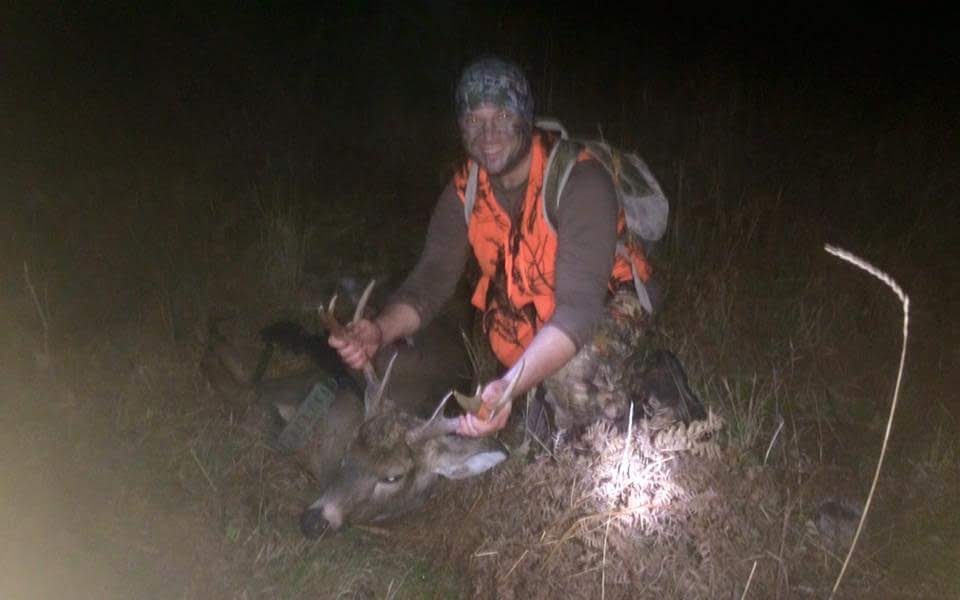
From where we set up our deer camp in the Pigeon River Country, I often still hunt routes that take me in a two or three-mile circular route through hilly wooded terrain, and at many points along it I can be up to a mile or more from camp. In 2015, I was fortunate to shoot a 3 ½ -year-old eight-point buck shortly before the close of shooting light. I was up on a ridge I’d still hunted to where I’d sat against a tree watching a trail. The buck was cruising the valley below and I shot him at a distance of about 70 yards. He ran up the opposite hill, back down, and collapsed less than 50 yards from where I shot him. I waited about 20 minutes, and it was dark by the time I found him. I was looking at close to a mile-long drag of a heavy-bodied deer in the dark after I field-dressed him.

I could have marked my spot, gone back to camp, and returned in the morning with help. With coyotes around, though, I didn’t want to leave him so I grabbed an antler and started dragging him uphill. Luckily a pair of flashlights belonging to my dad and cousin shone from the top of the hill before I got too far, so my cousin and I each grabbed an antler and dragged him up the hill. I thought we could cut across a valley as a shortcut, but as it turned out it took us out of the way and we had to drag it back up a hill to get back on course, across a stump-and-slash covered clear-cut plateau, and down through the woods to our camp.

There’s nothing particularly unique about this deer drag, but we had to show some sisu to complete it. When something went wrong (we went the wrong way) we had to gut through it with stubborn determination despite adding an extra hill and probably an extra quarter-mile to our drag. In Michigan, I suspect sisu gets shown by hundreds of thousands of deer drags in cold weather across rough terrain every year.

Similarly, I think it’s sisu to gut out the discomfort and stay on stand when the weather is cold, when the seat is uncomfortable, and when every urge is to head back to camp for a hot meal. And maybe the most important way it shows in Michigan’s deer season is when a hunter loses a blood trail but doesn’t give up. Losing the blood trail is just the part that goes wrong; sisu is persisting in spite of that and making the small and widening circles to cut for tracks, to search for broken branches, and to find the deer no matter how long it takes.

Part of sisu is being prepared. For instance, you can’t drag a deer out if you don’t have the physical conditioning to do it without a heart attack. You can’t stay on the stand when you’re cold and uncomfortable if you don’t have the cold-weather clothing to prevent frostbite and hypothermia. And you might not find your deer after losing a blood trail if you didn’t bring extra batteries for your headlamp. I train with trail-running and CrossFit to be in condition to drag deer and I camp out in the snow in the winter to know my limits and how to keep warm in the cold. Don’t try to drag out a deer if you have a heart condition or are just not in condition to do so or risk frostbite or hypothermia because you didn’t layer up. Sisu isn’t being reckless in the short term; it’s being determined in the long-term.
​
Sisu is a special quality but it doesn’t have to be unique. Any person can show it; Michigan’s hunters just get more opportunities than most. When something goes wrong or gets hard this deer season – you shoot a heavy deer in a valley a mile from camp, you get cold and uncomfortable on stand, you lose your blood trail, or the million other things that can go wrong in deer hunting – don’t give up. Just look at it as a chance to show your sisu. Make the drag, stay on stand, find your deer. That’s sisu. 

Comments

Tracking Snow

12/15/2019

Comments

 
By Drew YoungeDyke
This Michigan Outside column was originally published in the December 2019 issue of Woods'N'Water News. 
A frigid dawn crusted the snow with a crunchy top layer that made still hunting all but impossible on last year’s opening day. As it warmed up, though, it became soft and quiet and fresh snow fell overnight. Early the next morning before dawn I crawled out of the sleeping bag on my cot in our deer camp’s outfitter tent in the Pigeon River Country State Forest and dressed for the day with the excitement of a child on Christmas morning: we had tracking snow.

Fresh snowfall during deer season awakens the inner Natty Bumpo of Northwoods hunters. At least it does for me as a dedicated still hunter unless conditions are absolutely prohibitive. It’s a method passed down to me from my dad and my grandpa, as was the Winchester Model 70 I loaded with Federal premium copper ammunition at legal shooting light. I hiked uphill into the woods behind camp and cut for sign, hoping to find a buck track that would fit one of my .30-’06 rounds but willing to follow a smaller buck or a doe that may attract one.

When still hunting, I usually follow deer trails. Deer take the path of least resistance, and often it is the path that will allow me to travel more quietly through thick cover. Unlike farmland, on northern Michigan public land forests deer trails go all over, not following any one definitive runway. This allows a still hunter to follow one doe trail to the next to piece together a route consistent with the terrain and wind, always alert for deer sign and presence, but it also makes it difficult to tell which trails are being predominately used. I’ve become adept at following fresh deer tracks without snow, but when fresh snow blankets the ground the picture becomes infinitely clearer. On these days, with soft footfalls and hopefully falling snow to mask my scent and movement somewhat, I’ll take a promising track and just follow it wherever it goes.

On the second day of firearm season last year I found a very fresh medium size track that could be either a large doe or small buck. I decided to follow it, even though I didn’t have an antlerless tag, in case it was a small buck or a doe that would cross paths with a larger buck. The wind cut generally crossways from the direction of the tracks and I followed them all morning through upland cover, wetlands, hardwood hills, young red pine valleys, around in a circle where it checked it’s back trail, and up along a ridge where I shot an eight point a few years ago. It was as good of a workout as you’ll find in the deer woods other than the drag out.

Still hunting is the most all-consuming method of deer hunting for me. Every sense is engaged. Every twist and turn of the track, every new viewscape, tingles the senses with anticipation. Your eyes search below every red pine branch; maybe the deer bedded down. Looking for a horizontal shape in every stand of hardwoods. A flicker of an ear through the falling snow. Stopping and kneeling frequently to scan every quadrant with binoculars, wondering what could be on the other side: a six point you would gladly take for the freezer? A doe that will intersect the path of an older eight point farther on? Along the way, you learn more about the deer.

Tracking snow has always told stories of the deer woods for observant hunters. During one of the first deer seasons I hunted at our former deer camp on Beaver Island, it told a story that, as much as any other, helped me understand the workings of nature. I followed the fresh track of a small deer along a trail just after dawn. From one side, a coyote’s tracks dropped in behind it. Another’s joined from the other side. The deer’s walking gait disappeared and reappearing in a bounding leap and the coyotes’ spaced out, but it was too late. A spatter of blood on the trail and then all three veered sharply off into the thick swamp.

It can tell our tales, too. A few years ago, before we moved our deer camp to the Pigeon River Country, I was camped out alone away from the road behind a couple-year-old clear cut. My dad planned to meet me at the camp for lunch one day and hunt with me in the afternoon, so at dawn I followed the fresh track of a buck away from camp into the woods. I veered away from it to avoid putting the wind at my back at times and rejoined it, guessing from the cover and direction where it might be headed. Toward mid-morning, I saw the blaze orange of another hunter in the woods and was going to veer away in another direction, but the other hunter saw me as well and waved. The hunter’s outline looked familiar and I recognized my dad, but how did he find me a half mile from camp after I’d swung wide away? He couldn’t have followed my tracks and caught up to me, even as slow as I was going.

He told me he saw the direction I was headed, saw the track I was following, and saw where I veered away from it. And since he taught me how to track and still hunt, how to hunt the way I did, he thought about what he would do, given the sign and terrain, guessed where I would end up if I did the same thing, and meet me there. And that’s exactly what he did.

I wondered what tales I would trail on this hunt. What would the tracks tell me? I found fairly fresh pellets, which confirm that I’m not too far behind the deer. I see where it stopped to pee, though, and the yellow snow is behind it, indicating it’s likely a doe. I pass no fresh rubs. Finally, I see what I’ve been following. A horizontal brown body amidst vertical hardwoods. I see the doe just before she sees me and bounds away; I took that one step too many and too fast that every still hunter realizes a moment too late. Without an antlerless tag, it would be a pass anyway. I tracked another deer the next day and watched the doe from 40 yards away wishing I had an antlerless tag. They were the only deer I saw last season.

Tracking snow has yet to connect me with a deer for the freezer. I’ve killed a few deer still hunting with a bow and a rifle, though, following deer trails without snow. My best deer, the eight point I shot from the ridge a few years ago, was killed after still hunting and following a fresh deer trail in the afternoon until it crossed a saddle into a valley I’d scouted in the offseason. I sat against the base of a tree on the ridge overlooking the valley and passed up a fork and two does before shooting the buck cruising for does.

Just as every bend of the trail excites this hunter with anticipation while tracking deer in the snow, so does the dawn of each new season. My rifle is sighted in with premium copper bullets, I’ve scouted our public land hunting grounds, and my freezer is stocked with pasties ready to fill the cooler at deer camp. And this year, I drew a public land antlerless tag for Otsego County. Now if only I can get some tracking snow to go with it…

(UPDATE: I still-hunted upon a pair of does, drew my rifle on one offhand, and as I hesitated - and probably moved the rifle too much - trying to ensure it wasn't a button buck, it blew and ran before I took the shot.)
​
Comments

Ruffed Grouse Hunting a Great Fall Exercise

11/15/2019

Comments

 
By Drew YoungeDyke
This Michigan Outside column was originally published in the November 2019 issue of Woods'n'Water News. 
The springer spaniel darted in front of us, flushing a ruffed grouse from the hunter walking trail but too far in front of us for a shot. It was our only flush of the day, but the heartbeat thump that echoed through the woods was exciting for two new ruffed grouse hunters in our party from out West. We had covered over five miles of tough hiking both on the trail and most often off of it in the dense young forest cover grouse prefer. Ruffed grouse hunting offers a perfect opportunity to log some cardiovascular exercise while enjoying Michigan’s outdoors.

I have only hunted ruffed grouse a handful of times, shooting none and missing one. Every hunt – tagging along with more experienced upland hunters – has covered between about three and five miles of hiking. Unlike still-hunting for white-tailed deer, upland hunting goes at a much faster pace, often trying to keep up with my friends’ bird dogs in a skirmish line, through whatever cover may arise.

Ruffed grouse prefer young forests which have a much thicker undergrowth than older canopied forests which block the sunlight, especially young aspen forests. The Mosinee Grouse Enhanced Management System (GEMS) in Gogebic County, about five miles south of Wakefield, holds multiple blocks of mixed age-class aspen stands and maple and oak forests interspersed by upland openings and hunter walking trails. Nine friends joined me there in late September as part of a cast and blast weekend of ruffed grouse hunting and northern pike fishing with non-lead ammunition and fishing tackle, based out of my family’s cottage on nearby Chaney Lake.

Our party split into two groups. Jordan Browne of Michigan Out-of-Doors TV was filming so we sent him with the more experienced ruffed grouse hunters consisting of Michigan United Conservation Clubs president George Lindquist, Wisconsin Wildlife Federation president Craig Challenor, Michigan Chapter of Backcountry Hunters and Anglers co-chair Ryan Cavanagh, and Huron Pines AmeriCorps coordinator Sarah Topp. I joined the other group of my National Wildlife Federation co-workers Aaron Kindle of Colorado and Marcia Brownlee of Montana, and Wisconsin Chapter of Backcountry Hunters and Anglers members Bill Koepke and Marissa English of Wisconsin and their springer spaniel, Jango.

While my western colleagues have hunted dusky grouse and sage grouse, they were surprised by how much ground we covered looking for Northwoods ruffed grouse. A 154-pound person burns an average of 370 calories per hour, according to the Center for Disease Control. Hiking on uneven ground, though, burns 28% more energy than walking on even terrain. Most grouse hunting occurs on uneven ground, even if the elevation is relatively flat as you step over fallen logs, duck under branches, and walk through a mix of ground cover types. While calories burned are a function of the hunter’s weight and will be different for every hunter on every hunt, it’s safe to say that it will be significantly more than the calories burned while sitting on the couch watching football game on television.

Neither of our parties got a shot on grouse that day; the other party had three flushes but no shots through the thick and colorful late September foliage. Ryan had picked up a roadkill grouse on the drive over, though, so we cooked that up as a lunch appetizer to go with pasties from Randall’s bakery. A 4-oz. serving of ruffed grouse contains 29g of protein and 1g of fat, according to the USDA, making it a healthy source of lean protein. And if you use steel shot or another non-lead alternative, you keep it clean of lead toxicity both for anyone eating it and any raptor scavenging it if you wound or fail to recover it.

The Mosinee GEMS site we hunted is part of the Michigan DNR’s network of 19 sites across northern Michigan and the Upper Peninsula which are managed specifically for high quality ruffed grouse habitat that is publicly accessible and easily recognizable. It is actually Gogebic County forest, known as the Mosinee Grade Tract. I learned from my mom’s cousin that my great-grandpa used to hunt that tract.

Ruffed grouse habitat requires active forest management to keep young forests in rotation: this means trees have to be cut. In the Pigeon River Country State Forest, where I’ve hunted grouse and where I do most of my deer hunting, the DNR is planning an ambitious conversion of 88-year-old red pine stand choked with invasive species understory into an upland habitat mecca. The 230-acre stand will be clear cut and the ground roller-chopped to allow early successional aspen to regenerate, interspersed with oak and hawthorn plantings to provide wildlife food sources.

This project will occur in a highly visible section of the forest, where many people may misunderstand the wildlife value of clear cuts like this. For a few years after treatment in 2021, it will look like a clear cut where pine trees now stand. But conservation is about the long term, and in a decade or so when my infant son is ready to start hunting with me – if he decides to – the area will be regenerating into aspen cover for ruffed grouse and I might finally be successful at hunting them!
​
Ruffed grouse hunting has been growing on me as upland hunting friends have invited me along over the last few years. I enjoy the camaraderie, the terrain, the habitat, the dogs, the heartbeat thump of the grouse beating their wings, and the taste of the grouse my friends have shot. And I hardly even noticed that the whole time I was also burning calories and getting a great cardiovascular workout. Ruffed grouse hunting in Michigan is a perfect way to find fitness in the outdoors. 
Comments

Of Life, Death, and Deer Camp

11/11/2010

Comments

 
Picture
Charlevoix, Nov. 2000

Of Life, Death, and Deer Camp
by Drew YoungeDyke

Ten years ago this November, I experienced the most perfect hunting season I could imagine. I was twenty years old, a junior at Michigan State and five years removed from the most recent deer season in which I'd hunted. During the intervening years, varsity sports, girls, and fraternity parties had distracted me from an overwhelming interest in deer hunting. However, a couple years earlier my maternal grandfather had moved back to Michigan from Wyoming, where he'd lived since before I was born. To understand the effect this had on me, you would have to understand something about who he was: a genuine legend of a man, someone whom a boy on the cusp of manhood could only hope to emulate.


We fished often in the preceding summers when I would come home to Gaylord from East Lansing. He had a small fishing boat docked on the Torch River from where we'd troll for pike in Lake Skegamog and Torch Lake. While my limited fishing ability must have frustrated him, he didn't show it, and we talked of life through stories from his past, which included boxing as a teenager and staying in the United States when his parents moved to Canada so that he could enlist in the Army Air Force, where he served as a Second Lieutenant, gunnery instructor, navigator and bombardier stationed in North Africa and Sicily during the second World War. He returned from the war and spent fifty years as a small-town doctor, one of the last who would make house calls and accept home-baked pies in lieu of payment, first in my hometown of Central Lake and then in Lusk, Wyoming, where he moved for the mule deer and antelope hunting opportunities. He often mentioned the deer camp on Beaver Island which he'd started with some friends in the late 1960's. I'd heard of the camp from my dad, who'd been a member of the camp since my grandpa moved to Wyoming in 1977, and where he'd go for opening weekend after football season ended each year when I was younger (he was the varsity high school coach). I'd never been there, though, as I was too young at fourteen and fifteen and had little interest at sixteen, seventeen and eighteen.

 
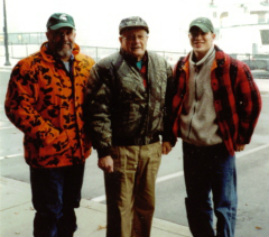
I regained my interest in hunting by the time I was twenty, though, and my dad decided to take my grandpa and I to the camp as guests for the 2000 opening weekend. It would be my first trip ever, and my grandpa's first in at least twenty years. I was as excited as I could be, and anxious to see the legendary camp of which I'd heard so much about. I didn't feel too bad about skipping a few classes, as that was something I did much too often, anyway. After sighting in the rifles at the gravel pit behind my parents' house and packing our gear the day before, my dad and I left Gaylord early on the morning of the seventeenth, two days after Opening Day, and met my grandpa at the Beaver Island Boat Company in Charlevoix for the ferry ride to the island. A picture snapped of us that day now rests on the mantle above my fireplace: my dad in his blaze orange parka, my grandpa in his camouflage goose-down bomber jacket, and me in my dad's old red and black checked wool coat; three generations of hunters embarking for a deer camp by the swamp on the island in the lake, layers of insulation to separate us from the trivialities of work, age, and the lecture hall.  

 
We played cards, snacked, and sipped cheap beer at our booth aboard the Emerald Isle, the newer ferry boat which sliced relatively smoothly through Lake Michigan's mid-November waves, while my dad and grandpa traded stories about the Northern Islander and other older vessels which churned the stomach during passages from years past. The trips were referred to as "two-baggers," or "four-baggers," depending on how often one puked during the three-to-four hour journey. The Emerald Isle's captain came down from the bridge and told us how the hunting had been on the island thus far. Beaver Island has had some lean deer populations over the last thirty years, though occasionally the population does well with moderate winters and through the efforts of the Beaver Island Conservation Club. 

 
My grandpa's Jeep Grand Cherokee awaited us near the dock where it had been unloaded from the cargo hold, and we drove down King's Highway toward the camp, the road named for the famed "King" Strang, who ruled the island in the 1850's when it was an independent Mormon kingdom until Strang's assassination in 1856. The island has rich history which is never below the surface but always prominent. We turned onto a rutted dirt road and pulled into the two-track that served as the driveway. The camp was a wood-sided 1950's-era mobile home, but the mowed field next to it drew our attention as a dark gray buck with a sizeable rack sauntered along its edge a hundred yards away. I jumped out of the Jeep and tried to uncase my rifle, but the buck had disappeared into the woods and swamp beyond. My heart leapt and the deer has remained an enigma of possibility, a swamp ghost, as I have never since seen such a magnificent buck on the island and I sometimes wonder if it was real or a phantom. We helped my grandpa out of the van along with his oxygen tank, which would limit him to a nearby and easily accessible blind from which to hunt during the weekend. We set our rifles on the porch and walked inside, and my eyes moved from gear left over from the 70's to rules posted on the wall in the 60's and a blaze orange Jones cap from the 80's. The other hunters at the camp greeted us as they came in for lunch after the morning hunt. We ate, drank beer, and told stories of hunts, customs, and antics from years past which cannot be put in print due to the maxim, "what happens at deer camp stays at deer camp," which far predates the similar Las Vegas tourism slogan.

 
We drove my grandpa to his blind, which overlooked a field behind which was a bedding area, and my dad and I went on a two-person still hunt: he's always been a still-hunter, practicing a technique coarsely called "pussy-footing" in some hunting circles, and he taught me to hunt the same way. We didn't see any deer, though we saw sign, as we probably moved too fast to be effective, though it served the purpose of acquainting me with the terrain. We returned to camp after dusk, played poker, ate back straps from a deer shot a couple days earlier, drank more beer and recounted our day's hunt under the simmer of Coleman lamps suspended from the ceiling. We sat on old couches and discussed deer-hunting strategies and more bucks taken, and I watched my grandpa look with pride at my dad and I sitting across from him, carrying on the tradition he'd started thirty years earlier. We retired to our separate bunks to awake early and rested for the next day's hunt. I awoke in the middle of the night and found my way to the porch by flashlight, and was swallowed by the immensity of the wind whipping down from the north, across the field, into the woods beyond and out to Lake Michigan. East Lansing was a million miles away, and I was in the old northwest, in a place where Odawas, French trappers, Mormans and Irish fishermen and farmers had staked their piece of history. 

   
Well before dark on the following morning, we drove my grandpa down a two-track to the blind. We carried his gun, oxygen tank and an extra blanket, and helped him around an old fence and into the blind. I know it hurt his pride to have to be helped like that after the adventurous life he'd lived, but he was content once situated in the blind. Before we left him, promising to come get him in mid-morning for a breakfast of shit-on-a-shingle, he said, jokingly but earnestly in his smoky, gravelly voice, "If I'm dead when you get back, you'll know I died happy."

 
He was thankfully alive when we returned, and for the next couple days I sat in a blind, built by my dad in the section where my grandpa used to hunt, during the morning and evening and still-hunted during mid-day. It had snowed and tracks were readily visible. I jumped a few does but didn't get off a shot.

 
On the second to last afternoon of the hunt, I was sitting in the blind, which was built in the crotch of a tree where its trunk split in three. I'd been there for a few hours, silent, still, cold, and alone with my thoughts. I was thinking about a four-pointer I'd passed up earlier because I didn't have a clear shot, wondering if I should have taken it,  when a big, fat doe emerged from the cedar swamp into a clearing fifty yards away. My breathing quickened, and I slowly turned to shoulder my Remington Model 700 .243, and located the deer in the crosshairs of the scope. I took a breath and pulled the trigger evenly as I exhaled. The doe jumped and ran into the swamp, stumbling. Not remembering to sit still for a half hour, I immediately followed its blood trail and tracks into the swamp behind it. I jumped it twice from where it crawled under brush to die, until it could go no further. It still breathed as its vacant eyes looked into mine, and I felt immeasurable guilt at what I'd done. I racked another shell, pointed the muzzle at its head and pulled the trigger to end its suffering. I sat down in the snow and stared at it. My gut felt hollow. I did not the feel the joy often seen plastered on the faces in outdoor magazines as they smile broadly next to their trophies. I felt the heaviness of life and death, the tenuousness of mortality, tempered by a measure of satisfaction at having accomplished the task. I apologized to the doe and removed my knife from its scabbard.

 
My dad, who had heard the shot and recognized the report of his old gun, walked up from behind me and showed me how to field dress it correctly. I tried to leave my guilt in the snow, focusing instead on the process of removing the entrails and draining the cavity, hands and forearms warm and red with blood. We then marked the trail back to camp, where I grabbed a wheelbarrow and retrieved the doe while he investigated another shot in another part of the woods. When I returned with the doe, I told my grandpa how I felt and he told me "That's how you're supposed to feel," in a tone suggesting that was the only way one could feel, but that we don't talk about it. We hung the deer from the buck pole and fried up its tenderloin along with that from a deer another member of camp had shot shortly after mine. The circle of life complete, for the first time I tasted the meat of a deer that I had gone into the woods and killed, rendering sustenance out of wilderness. The first bite was both sweet and bittersweet. The unvoiced pride on my grandpa's face stayed with me; not pride that I had killed a deer, but more likely that I had respected the process and not acted like a jackass about it.

 
This is not a unique story. It was a seminal moment for me, to have taken my first deer at The Camp with my dad and grandpa there, but it happens every November hundreds of thousands of times across the country. It is why deer camps exist and why we hunt (at least most of us). It is the generational transfer of knowledge, of skills, of the old ways and the understanding of how our species exists and how nature works. It is the realization that, as omnivores, we exist because animals die. It is coming to terms with life from death, with respecting an animal even as we kill it, because respect for our prey is what separates hunters from killers.

 
My grandpa was able to come to deer camp once more before he died in 2004 at the age of seventy-nine. He came the next year with my dad, my old college roommate and me during Thanksgiving weekend, though the boat ride back to the mainland was so rough on him that he didn't go again. My old roommate died unexpectedly in St. Louis in August of 2003 at the age of twenty-two. On the inside of the utility shed door at deer camp, their names and those of many others to have hunted there - some alive and some now dead - are etched in eternity, or at least as long as hunters hunt. I've gone there a few times since, but no hunt has matched the soul of that first season ten years ago. There are no antlers on my wall to remind me of it, but there is a picture on the mantle and a memory as long as life itself. 


Comments
    Picture

    RSS Feed

    AUTHOR

    Picture
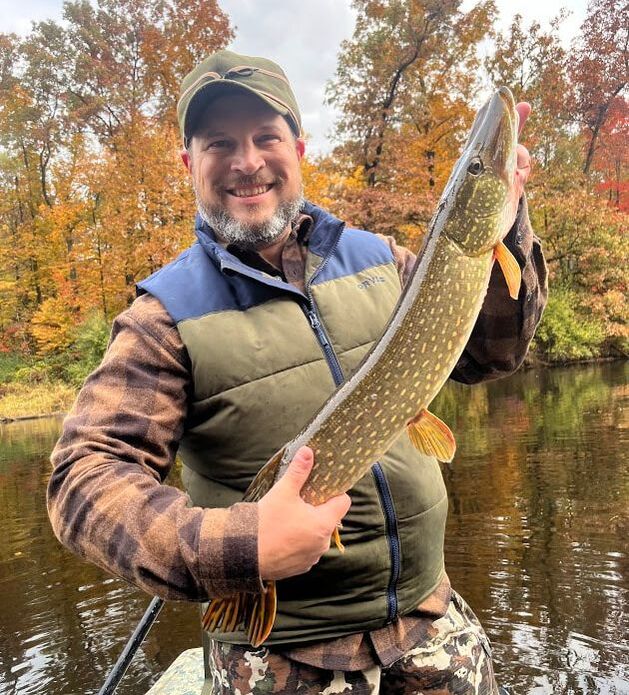
    Drew YoungeDyke is an award-winning freelance outdoor writer, a regional communications director for national nonprofit conservation organization, the Vice President of the Michigan Outdoor Writers Association, a board member of the Outdoor Writers Association of America, and a member of the Association of Great Lakes Outdoor Writers.

    All posts at Michigan Outside are independent and do not necessarily reflect the views OWAA, AGLOW, MOWA, the or any other entity.


    ARCHIVES

    December 2024
    November 2024
    January 2024
    December 2022
    June 2022
    May 2022
    April 2022
    March 2022
    February 2022
    January 2022
    October 2021
    July 2021
    June 2021
    May 2021
    April 2021
    February 2021
    December 2020
    November 2020
    October 2020
    September 2020
    August 2020
    January 2020
    December 2019
    November 2019
    October 2019
    September 2019
    August 2019
    July 2019
    June 2019
    May 2019
    February 2019
    September 2018
    May 2018
    September 2017
    April 2017
    January 2017
    December 2016
    December 2014
    February 2013
    January 2013
    October 2012
    September 2012
    August 2012
    July 2012
    June 2012
    May 2012
    April 2012
    March 2012
    February 2012
    January 2012
    December 2011
    November 2011
    September 2011
    February 2011
    November 2010


    SUBJECTS

    All
    Antique Lures
    April Fools Day
    Backpacking
    Camping
    Conservation
    Deer Hunting
    Environment
    Essay
    Fishing
    Fishing Tackle
    Fitness
    Fly Fishing
    Fly Tying
    Fresh Coast
    Gear
    Great Lakes
    Hunting
    Law
    Michigan
    Northern Pike
    Opinion
    Outdoor Industry
    Outdoors
    Poems
    Politics
    Public Land
    Recreation
    Renewable Energy Standard
    Ruffed Grouse
    Snowshoeing
    Social
    State Parks
    Surfing
    Tracking
    Trail Running
    Upland
    Wild Game
    Wildlife
    Xc Ski


    RSS Feed


Copyright 2014 Drew YoungeDyke
  • Home
  • Blog
  • About